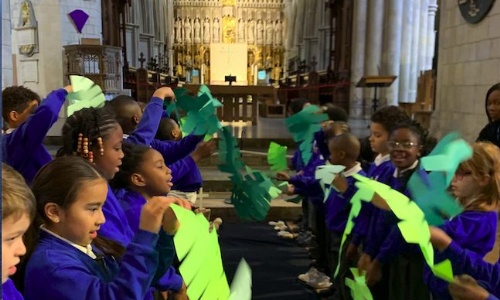
Religious Education
Be curious.
Be informed.
Be reflective.
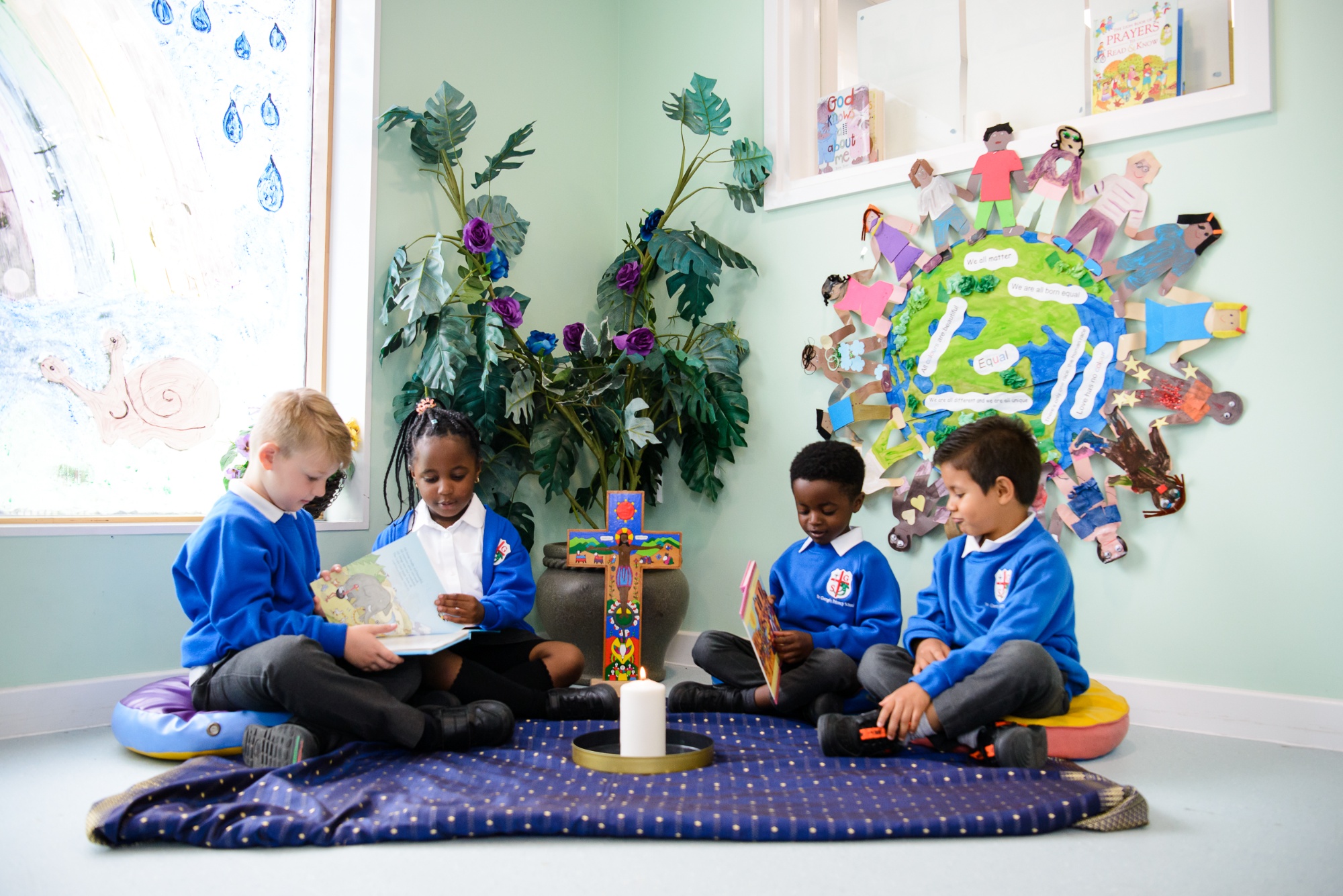
Our Curriculum Vision Statement for Religious Education
Be curious. Be informed. Be reflective.
Intent
Our intent is to deliver Religious Education which reflects the Church of England Statement of Entitlement (2019).
We want to give our pupils a deep understanding and appreciation of a range of religions and world views.
To this end, we use an adapted version of the Southwark Diocesan Board of Education (SDBE) RE Syllabus which:
- Provides clarity over key objectives and vocabulary.
- Raises the profile of deeper thinking and reflection.
- Increases the amount of 'assessable moments'.
The foundation of the Southwark Diocesan Board of Education (SDBE) RE Syllabus ensures our RE curriculum is ‘progressive, sequential, innovative, creative, exciting and engaging, its relevance made clear for all’ SDBE RE policy (2022).
It responds to research in high quality RE, national calls for deepening pupils’ knowledge about religions and for developing their ‘religious literacy’ and SDBE work in RE.
Implementation
All areas of our curriculum are implemented using ten principles of effective instruction outlined in our Teaching Touchstones, which work in symbiosis with the Gradual Release Towards Independence model for teaching.
Coverage:
Religious Education is a core subject at St George's. In line with the Church of England Statement of Entitlement, an hour and a half of dedicated curriculum time is committed to the delivery of RE.
The syllabus is sequenced through systematic units, focused on one religion, and thematic units which build on learning by comparing the religions, beliefs and practices. The syllabus comprises teaching units for the teaching of Christianity at Reception, Key Stage 1 (KS1) and Key Stage 2 (KS2) and the study of other principal world religions and worldviews in KS1 and KS2.
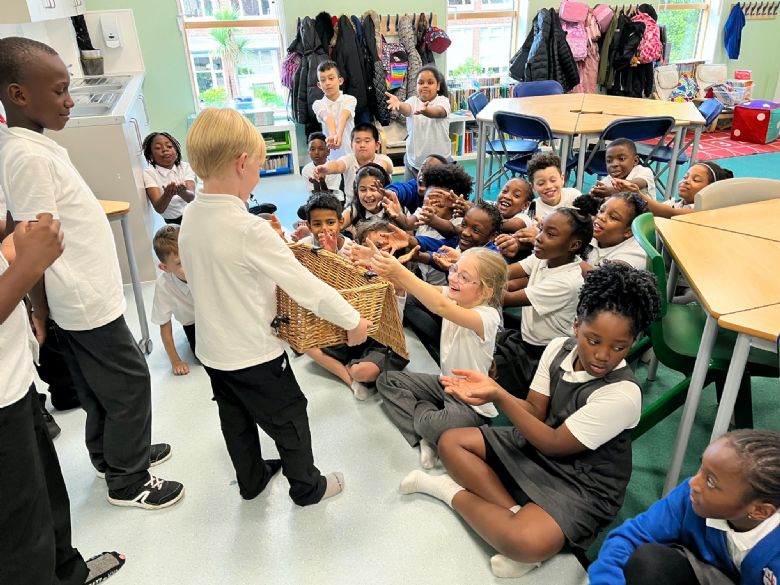
In the Early Years Foundation Stage, RE learning is integrated within the weekly provision as well as having dedicated carpet time teaching.
The Big Question:
All RE topics are led by a 'big question'. These big questions act as the glue which binds learning across the sessions in that unit. In line with our subject vision for RE, sessions seek to give pupils the space to 'be curious' about aspects of religion; to provide them with powerful knowledge, so that they may 'be informed'; and to provide space to 'be reflective' when pondering the answers to the 'big question'.
For every session within a unit, there is a planned knowledge-based question coupled with a deliberately planned reflective question.
Question 1 - Knowledge based:
This question is for pupils to learn about religion, and pupils are exposed to the more factual aspects of the RE curriculum. The knowledge based questions are used to facilitate pupils learning the declarative knowledge or facts needed in order to move towards deeper thought for reflection.
Question 2 - Thinking/Reflecting:
This question is for pupils to learn from religion. This is where pupils are given the chance to develop the skills of questioning, exploring, reflecting and interpreting human experiences within religion and beliefs. For every session within a unit, there is a deliberately planned reflective question.
Reflections have been planned to ensure a mixture of personal responses: times when pupils reflect on how what they have learned resonates with their own experiences; and impersonal responses: times when pupils reflect on what meaning may be taken by others from what they have learned. At St George's, reflection and deeper thinking is given the highest of significance. Challenge is particularly provided by reflective questioning, aiming to develop critical thinking skills.
Lenses:
The teaching and learning approach also has three disciplinary lenses or ‘ways of knowing’ (believing, thinking, living), which are woven together as golden threads to provide breadth and balance within teaching and learning about religions and beliefs, underpinning the aims of RE. Teaching and learning in the classroom will encompass all three elements.
These elements set the context for open exploration of religion and belief. They offer a structure through which pupils can encounter diverse religious traditions alongside non-religious worldviews.
Theology (beliefs):

Identifying and making sense of core religious and non-religious beliefs and concepts; understanding what these beliefs mean within their traditions; recognising how and why sources of authority (such as texts) are used, expressed and interpreted in different ways, and developing skills of interpretation.
Sociology (living):

Examining how and why people put their beliefs into action in diverse ways, within their everyday lives, within their communities and in the wider world.
Philosophy (thinking):

Evaluating, reflecting on and connecting the beliefs and practices studied; allowing pupils to challenge ideas studied, and the ideas studied to challenge pupils’ thinking; discerning possible connections between these and pupils’ own lives and ways of understanding the world.
Vocabulary:
For each topic, we have carefully picked out key vocabulary which needs to be acquired in order for pupils to be able to respond in an 'informed' way. The vocabulary has been separated into two groups.
Key abstract terms are vocabulary which pupils will encounter across RE topics and across Key Stages. They are important concepts which pupils will revisit, each time with a different lens or greater depth.
Tier 3 vocabulary is vocabulary which is specific to that particular unit.
Vocabulary is taught through a variety of mechanisms, in line with our approach to vocabulary across all curriculum areas.
Impact
The impact of our curriculum is directly aligned to our whole school vision and culture statements, the Church of England Statement of Entitlement, and the aims and purposes set out in the St George’s and SDBE RE policies.
We say to our pupils:
Be curious
This means we want our pupils to:
Be brave:
- Ask questions that challenge their own thoughts and viewpoints.
Be great:
- Engage with challenging questions of meaning and purpose.
Be you:
- Seek out opportunities to discover more about others so that they can develop their own faith or viewpoint further.
Be informed
This means we want our pupils to:
Be brave:
- Be informed Courageous Advocates of social justice.
Be great:
- Know about and understand Christianity as a diverse global living faith.
- Gain knowledge and understanding of a range of religions and worldviews.
- Hold balanced and well-informed conversations about religion and belief.
Be you:
- Know how to seek out informed answers to their own questions.
- Know that their viewpoint and cultural capital enriches how informed they are.
Be reflective
This means we want our pupils to:
Be brave:
- Thoughtfully challenge their own viewpoints whilst reflecting on what is important to them.
- Reflect on issues that they may find difficult or challenging.
Be great:
- Make connections between their own life experiences and those of others.
- Articulate their thoughts and reflections from a personal and impersonal perspective.
Be you:
- Explore their own religious, spiritual and philosophical ways of living, believing and thinking.
- Build their own personal faith or viewpoint.
- Develop personal understanding of their own faith, and that of others, by thoughtful, considered, and informed, reflection.
- Be able to use their own faith to make reasoned and informed responses to social issues and life/moral choices.
Assessment
We assess attainment for RE against the St George's Religious Education Progress Model, which has been taken from the SDBE attainment target statements.
The Diocesan Syllabus for Primary Religious Education, in describing progress in RE, illustrates how pupils will develop increasing understanding through using the three RE Lenses for Learning:

Each topic has been designed to have a clear focus using these lenses.
Tasks are also designed to draw out pupils' knowledge and understanding using these lenses. Teachers use these tasks, alongside their knowledge of the child gleaned from formative assessment, to assess whether a pupil is on track or working towards being on track for their RE attainment.
The progress model can be viewed in full in the attachment at the bottom of this page.
RE Quality Mark: Gold
🏅 St George’s Awarded Gold RE Quality Mark
We are incredibly proud to announce that St George’s Primary School has been awarded the Gold Religious Education Quality Mark (REQM) — the highest level of national recognition for excellence in Religious Education.
The REQM is a prestigious national award which recognises schools that demonstrate outstanding teaching and learning in Religious Education. Schools undergo a rigorous process including a detailed self-evaluation, scrutiny of pupils’ work, lesson observations, and professional dialogue with an external assessor. Achieving Gold standard places St George’s among the very best schools in the country for RE provision.
This award celebrates not only the quality of teaching, but also the impact RE has on pupils’ thinking, attitudes, and understanding of the world.
🌍 Living Our Vision Through RE
At St George’s, our RE curriculum is rooted in our vision:
“Be Brave. Be Great. Be You.”
Our RE aims — Be curious. Be informed. Be reflective. — are brought to life every day in classrooms across the school. The REQM assessor recognised how deeply this vision is embedded:
“The aims of the RE curriculum… clearly mirror the school’s vision and values, which include promoting respect for all and ensuring all stereotypes and any form of discrimination are challenged.”
Our classrooms are places where pupils feel safe to explore big questions, share ideas, and respectfully challenge one another:
“Classrooms are ‘safe spaces’ where everyone is treated with dignity and respect. Pupils challenge inequality when they see this in school or in the wider world.”
📚 High-Quality Learning and Deep Thinking
The report highlights the richness and depth of our RE curriculum:
“A selection of different media are used… artefacts, film, photographs, music, arts, visits and visitors… to develop conceptual knowledge and understanding across all year groups.”
“Each unit of work has been planned around two big questions… with a focus on deeper thinking.”
Pupils are not only knowledgeable — they are thoughtful and reflective:
“Pupils are curious about the world and this desire to learn leads to high levels of engagement.”
“They have shared enthusiastically what they have learnt and talk about how RE informs their own lives.”
For example:
“One Year 5 pupil explained how learning about Hindu Karma helped him to consider his own decisions in life.”
“A Year 6 pupil could explain how Christian beliefs about looking after the world influence actions such as recycling.”
🌎 Respect, Diversity and Understanding
Our diverse school community is a strength, and RE plays a vital role in helping pupils understand the world around them:
“Pupils come from diverse cultural and religious backgrounds… religious literacy is developing very well.”
“Diversity issues within and across religious and non-religious worldviews are clearly exemplified by pupils.”
Pupils demonstrate a mature and nuanced understanding:
“A pupil could explain how beliefs, culture and background may influence how and why individuals practise their faith differently.”
👩🏫 Excellence in Teaching and Leadership
The award also recognises the strength of teaching and leadership in RE:
“The quality of teaching at St George’s is excellent.”
“The leadership and management of RE is excellent… staff are supported to provide consistently high standards of education.”
Our RE leader was praised for their passion and commitment:
“The RE Subject Leader demonstrates a love of learning… and a commitment to providing stimulating, creative and engaging lessons.”
⭐ A Whole-School Success
This achievement reflects the dedication of our entire school community — staff, pupils, governors, and families. RE is a subject that brings our values to life, helping children to understand themselves, others, and the wider world.
As the report concludes, RE at St George’s is:
“An integral part of the school ethos.”
We are delighted that our work has been recognised at the highest level and remain committed to continuing to develop and strengthen RE for all our pupils.

Trips
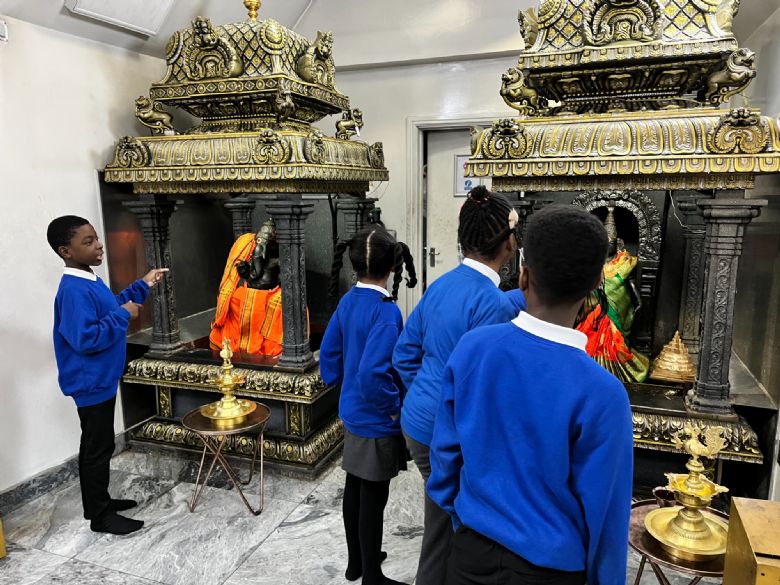
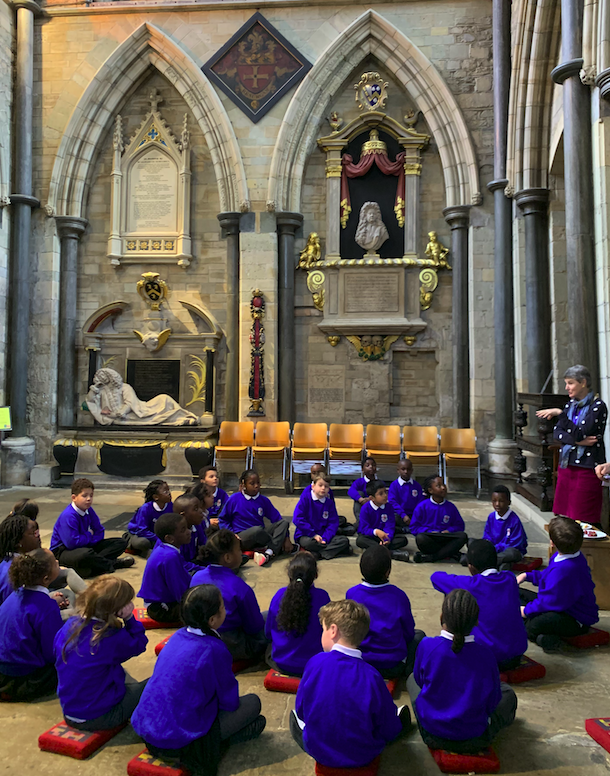
As part of our curriculum offer, we have planned opportunities to visit a variety of places of worship. We take guidance from Lewisham SACRE to ensure places of worship are appropriate for our pupils to visit. We make great use of St George's Church as a learning resource. It is also expected that pupils will visit a place of worship linked to any other world religion they are studying. This helps pupils to make deeper connections with similarities and differences between these important places.